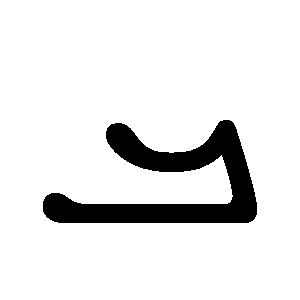
Copy and Paste Phoenician Alphabet Letters, Symbols and Script Characters


𐤁
𐤂
𐤃
𐤄
𐤅
𐤆
𐤇
𐤈
𐤉
𐤊
𐤋
𐤌
𐤍
𐤎
𐤏
𐤐
𐤑
𐤒
𐤓
𐤔
𐤕
𐤖
𐤗
𐤘
𐤙
𐤚
𐤛
𐤟
Table of Symbols
| Symbol | Name | Unicode | HTML | Download |
|---|---|---|---|---|
𐤀 | Phoenician Letter Alf | U+10900 | 𐤀 | SVG | PNG |
𐤁 | Phoenician Letter Bet | U+10901 | 𐤁 | SVG | PNG |
𐤂 | Phoenician Letter Gaml | U+10902 | 𐤂 | SVG | PNG |
𐤃 | Phoenician Letter Delt | U+10903 | 𐤃 | SVG | PNG |
𐤄 | Phoenician Letter He | U+10904 | 𐤄 | SVG | PNG |
𐤅 | Phoenician Letter Wau | U+10905 | 𐤅 | SVG | PNG |
𐤆 | Phoenician Letter Zai | U+10906 | 𐤆 | SVG | PNG |
𐤇 | Phoenician Letter Het | U+10907 | 𐤇 | SVG | PNG |
𐤈 | Phoenician Letter Tet | U+10908 | 𐤈 | SVG | PNG |
𐤉 | Phoenician Letter Yod | U+10909 | 𐤉 | SVG | PNG |
𐤊 | Phoenician Letter Kaf | U+1090A | 𐤊 | SVG | PNG |
𐤋 | Phoenician Letter Lamd | U+1090B | 𐤋 | SVG | PNG |
𐤌 | Phoenician Letter Mem | U+1090C | 𐤌 | SVG | PNG |
𐤍 | Phoenician Letter Nun | U+1090D | 𐤍 | SVG | PNG |
𐤎 | Phoenician Letter Semk | U+1090E | 𐤎 | SVG | PNG |
𐤏 | Phoenician Letter Ain | U+1090F | 𐤏 | SVG | PNG |
𐤐 | Phoenician Letter Pe | U+10910 | 𐤐 | SVG | PNG |
𐤑 | Phoenician Letter Sade | U+10911 | 𐤑 | SVG | PNG |
𐤒 | Phoenician Letter Qof | U+10912 | 𐤒 | SVG | PNG |
𐤓 | Phoenician Letter Rosh | U+10913 | 𐤓 | SVG | PNG |
𐤔 | Phoenician Letter Shin | U+10914 | 𐤔 | SVG | PNG |
𐤕 | Phoenician Letter Tau | U+10915 | 𐤕 | SVG | PNG |
𐤖 | Phoenician Number One | U+10916 | 𐤖 | SVG | PNG |
𐤗 | Phoenician Number Ten | U+10917 | 𐤗 | SVG | PNG |
𐤘 | Phoenician Number Twenty | U+10918 | 𐤘 | SVG | PNG |
𐤙 | Phoenician Number One Hundred | U+10919 | 𐤙 | SVG | PNG |
𐤚 | Phoenician Number Two | U+1091A | 𐤚 | SVG | PNG |
𐤛 | Phoenician Number Three | U+1091B | 𐤛 | SVG | PNG |
𐤟 | Phoenician Word Separator | U+1091F | 𐤟 | SVG | PNG |
The Phoenician Alphabet is one of the most important writing systems in human history. It was developed around 1050 BC by the Phoenicians, a seafaring people who lived along the eastern Mediterranean coast, in what is now Lebanon and parts of Syria and Israel. The alphabet contained 22 letters, all representing consonant sounds, and was written from right to left. It is considered the first true alphabet, as it used symbols to represent individual sounds rather than whole words or syllables.
The Phoenician script became the foundation for many later writing systems, including Greek, Latin, Hebrew, and Arabic. Because the Phoenicians were skilled traders and sailors, their alphabet spread widely across the Mediterranean world, influencing many cultures. Its simple design made writing faster and easier, helping it replace more complex scripts like cuneiform and hieroglyphics.
Although the Phoenician alphabet is no longer in use, its influence lives on in nearly every modern writing system. It stands as a key milestone in the history of language and communication, marking the beginning of written alphabets as we know them today.